
At Arrow Care Services, we recognise that the severity of a learning disability can vary significantly. We offer expertly trained care professionals and personalised care packages tailored to meet the needs of you or your loved one, regardless of their individual abilities.
What are Learning Difficulties?
Most learning difficulties are categorised as verbal or non-verbal learning difficulties.
| Type | Example | Description |
| Verbal | Difficulty with both spoken and written words | May be able to read or write adequately but have trouble with other aspects of language |
| Non-verbal | Difficulty with the act of writing | Affect the brain and how it coordinates with other parts of the body affecting many day-to-day tasks |

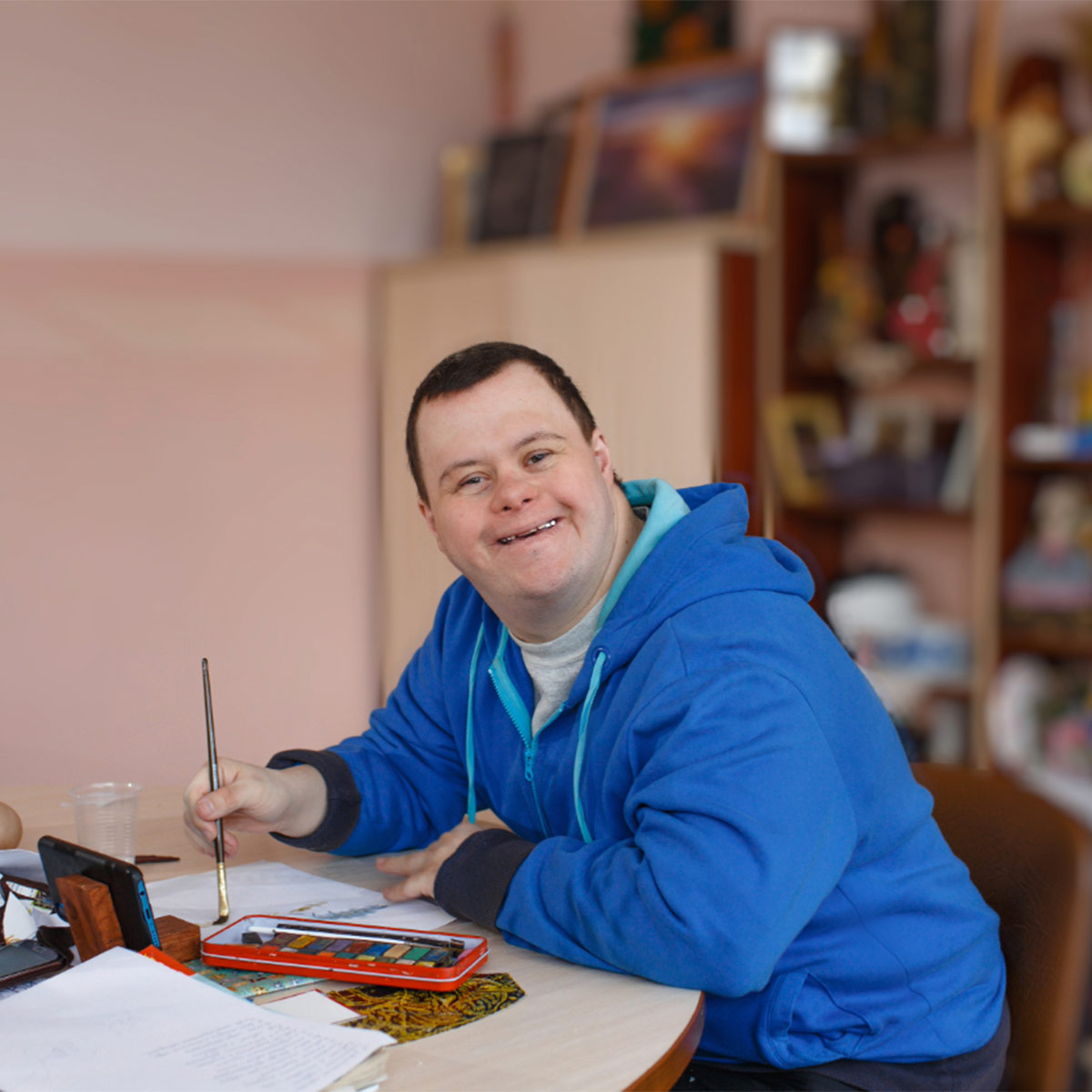
What are Learning Disabilities?
A learning disability is defined by the Department of Health and Social Care (DHSC) (2001) as:
“a significantly reduced ability to understand new or complex information, to learn new skills with a reduced ability to cope independently which started before adulthood. In all cases, a learning disability is a lifelong condition and cannot be cured.”
Learning Disability vs Learning Difficulty
A learning disability is different to a learning difficulty, which is a reduced ability for a specific form of learning and includes conditions such as dyslexia (reading), dyspraxia (affecting physical co-ordination) and attention deficit hyperactivity disorder (ADHD). A person with a learning disability may also have one or more learning difficulties.
Arrow Care Services takes pride in employing highly trained care professionals who can deliver exceptional home care for individuals with various conditions and neurological disorders, including Down’s syndrome, autism, and cerebral palsy.


